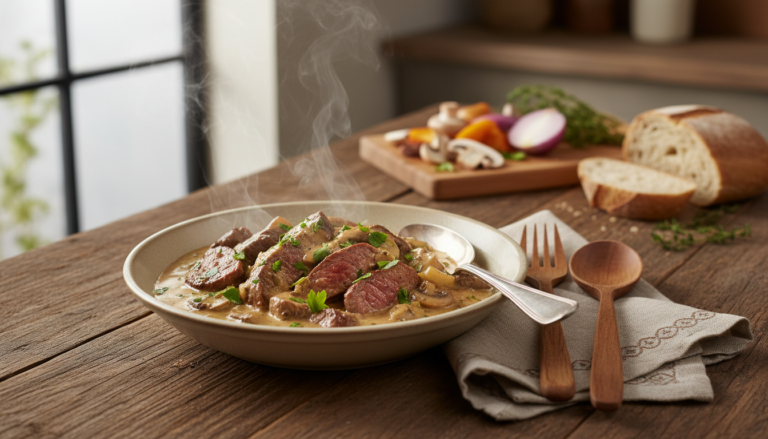
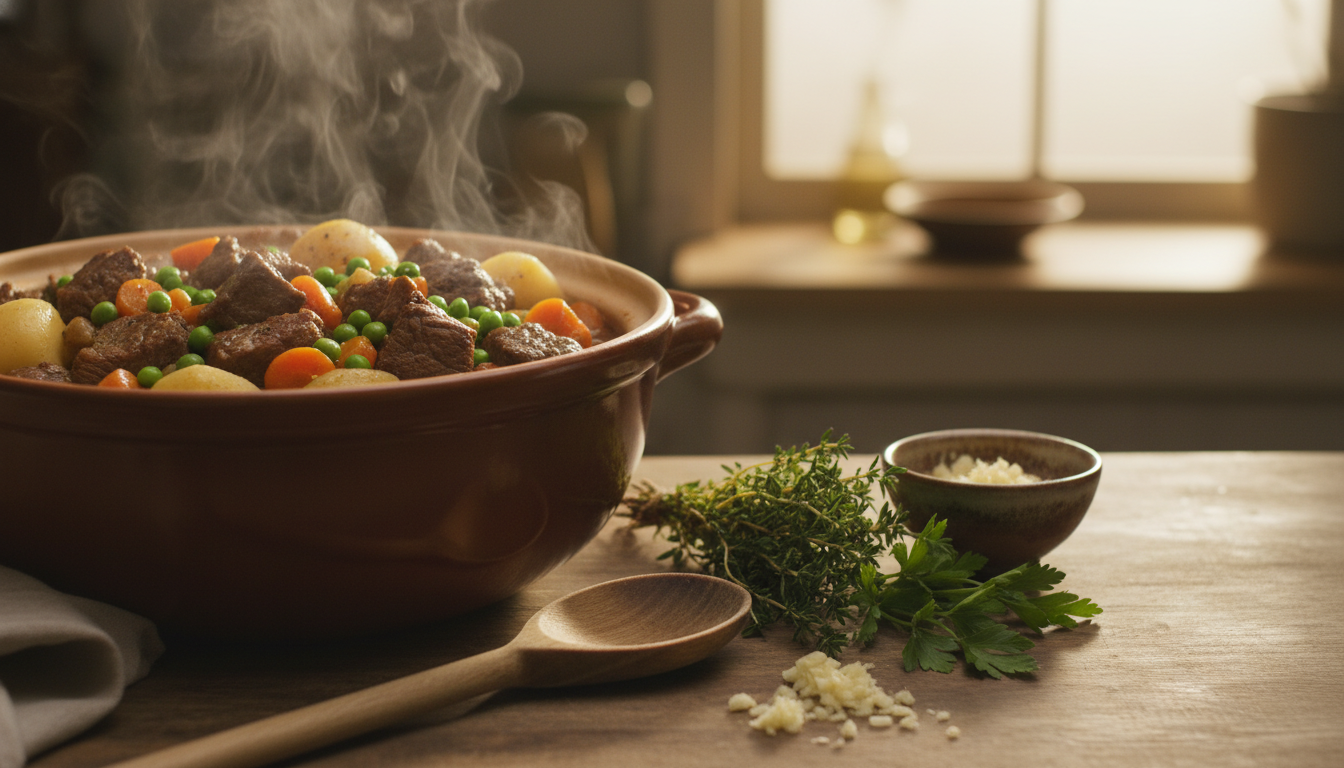
Easy Homemade Beef Stew
The smell of beef stew on the stove is incredibly comforting. It reminds us of home, warmth, and meals that make everything feel right. Whether it’s a cold winter night or meal prep for the week, beef stew is perfect. It’s like a warm hug for your belly and heart.
Traditional beef stew recipes often take too much time. But this recipe changes that. You’ll get all the flavors you love in just about an hour and forty minutes. The beef, veggies, and gravy come together beautifully without needing all day on the stove.
This recipe is special because it’s quick and delicious. You’ll learn how to choose the right beef, make flavorful gravy, and get the perfect thickness. Plus, it’s easy for anyone to make, whether you’re new to cooking or a pro. Let’s make restaurant-quality beef stew at home.
Key Takeaways
- This homemade beef stew recipe cooks in approximately one hour and forty minutes, cutting cooking time roughly in half compared to traditional recipes
- Beef chuck provides the best texture and flavor for tender, delicious stew meat
- Baby potatoes naturally thicken the gravy without needing flour or cornstarch
- One batch yields eight servings at around 296 calories per serving, making it perfect for meal prep
- You can prepare this beef stew recipe using a Dutch oven, slow cooker, or stovetop method
- This dish stores well in the refrigerator and freezes beautifully for future meals
- Rich flavors come from combining tomato paste, Worcestershire sauce, and quality beef broth
Why This Homemade Beef Stew Recipe is a Winner
Looking for a recipe that tastes great but is quick? This homemade beef stew recipe is perfect. It has over 200 five-star reviews, making it the top choice for many. It uses smart cooking tricks to create rich flavors without taking all day.
This stew is special because it’s easy to make but tastes like a restaurant dish. It’s ready in half the time of other recipes. It’s great for any day, whether you’re cooking for tonight or planning meals for the week.
Perfect for Weeknight Dinners and Meal Prep
Weeknights can be busy, but this stew is quick. It cooks in about an hour and forty minutes. This makes it easy to fit into your busy schedule.
Make it on a Sunday and enjoy dinners all week. The flavors get better with time. You can store it for up to four days, making weeknights easier.
- Cook once, eat multiple times throughout the week
- Flavors deepen and improve with time
- Reheat in minutes for instant comfort meals
- Perfect for portion control and planning
Rich Flavors in Half the Time
Many think deep flavors need hours of cooking. But this stew proves that’s not true. It uses smart ingredients and techniques to create rich flavors fast.
Seared beef and special ingredients like tomato paste and Worcestershire sauce add depth. Choosing the right beef ensures it’s tender without long cooking. This recipe shows you can have quality without sacrificing time.
“Best stew I have ever had” and “absolutely perfect” are just some of the reactions from home cooks who have made this recipe multiple times with consistent success.
| Recipe Feature | Traditional Beef Stew | This Easy Recipe |
|---|---|---|
| Cooking Time | 3-4 hours | 1 hour 40 minutes |
| Flavor Development | Long simmering |
Smart techniques and boosters |
| Meal Prep Friendly | Can be stored | Gets better over 4 days |
| Weeknight Suitable | Limited | Highly practical |
| Reader Reviews | Varies | 200+ five-star ratings |
This easy beef stew recipe makes dinner a joy. You get a homemade meal’s comfort without spending all day cooking.
Essential Ingredients for the Best Beef Stew
A classic beef stew starts with quality ingredients. You won’t need anything fancy or hard to find. Everything comes from your local supermarket. When you mix these simple components right, you get a hearty stew that tastes like it took all day to make.
Building a hearty beef stew begins with understanding each ingredient’s role. Think of your stew as a team where every player matters. The beef chuck is your star player, while aromatic vegetables build the flavor foundation. The cooking liquids bring everything together, and the seasonings add depth and complexity.
The Building Blocks of Your Stew
Start with 2 to 3 pounds of beef chuck as your protein base. The aromatic vegetables form what French cooks call a mirepoix—a combination that includes:
- 1 medium yellow onion, diced
- 2 to 3 carrots, cut into chunks
- 2 celery stalks, chopped
- 3 cloves of fresh garlic, minced
These vegetables create the flavor foundation for your classic beef stew. The onion adds sweetness, carrots bring natural sweetness and color, celery provides subtle earthiness, and garlic delivers savory depth.
Liquids and Flavor Enhancers
Next, gather your liquid ingredients and flavor builders:
- 6 cups of low-sodium beef broth
- 1 cup of red wine (Pinot Noir or Merlot works well)
- 1/4 cup of tomato paste for umami richness
- 1 tablespoon of Worcestershire sauce for savory complexity
Low-sodium broth gives you better control over your seasoning. Red wine adds depth and sophistication to your hearty beef stew, though you can use extra broth if you prefer.
Fresh Herbs and Vegetables
Fresh herbs and additional vegetables complete your ingredient list:
| Ingredient | Amount | Purpose |
|---|---|---|
| Fresh thyme sprigs | 2 sprigs | Earthy, aromatic flavor |
| Bay leaves | 2 leaves | Subtle herbal notes |
| Baby potatoes or Yukon Gold potatoes | 1 pound | Hearty texture and substance |
| Frozen or fresh peas | 1 cup | Sweetness and bright color |
| Fresh parsley | 1/4 cup, chopped | Fresh finishing touch |
These ingredients transform your classic beef stew from basic to extraordinary. Fresh parsley adds brightness right before serving. Choose Yukon Gold potatoes over Russets because they hold their shape better during cooking. The peas bring sweetness and visual appeal to your finished dish.
Every ingredient in a hearty beef stew serves a purpose. Understanding what each component contributes helps you make smart choices and create a stew that tastes homemade and delicious.
Choosing the Right Cut of Beef for Tender Stew
The secret to a tender beef stew is choosing the right meat. Not all beef is created equal when simmered for hours. Your choice can make the meat fall-apart tender or chewy.
Knowing which cuts are best will help you make a stew that tastes like it’s from a restaurant. This knowledge is key to a delicious tender beef stew.
Why Beef Chuck is the Best Choice
Beef chuck roast is the top pick for tender stew. It comes from the cow’s shoulder, where muscles work hard. This makes the meat rich in flavor and full of connective tissue.
Many think sirloin or tenderloin are best. But they become tough and stringy with long cooking. Beef chuck, on the other hand, gets more tender the longer it cooks. The fat and connective tissue melt, making it tender and juicy.
Chuck roast stays moist and doesn’t dry out. The fat in the meat keeps it juicy. Plus, it’s affordable, making it great for family meals without spending a lot.
How to Properly Cut Your Beef
Don’t buy pre-packaged stew meat. Instead, get a whole chuck roast and cut it yourself. Here’s why:
- Pre-cut stew meat has uneven sizes, leading to uneven cooking
- These packages often include tougher cuts with less fat
- Whole roasts let you choose quality and size for even cooking
Cut your chuck roast into cubes of 1 to 1.5 inches. Remove only the excess fat on the outside. Keep the marbling inside for flavor and tenderness. Cutting against the grain makes the stew’s texture better.
Step-by-Step Instructions for Easy Homemade Beef Stew
Making a one pot beef stew is easier than you think. Just follow each step carefully. This method makes the meat tender and vegetables perfectly cooked in one pot. Let’s go through it together.
Searing Your Beef for Maximum Flavor
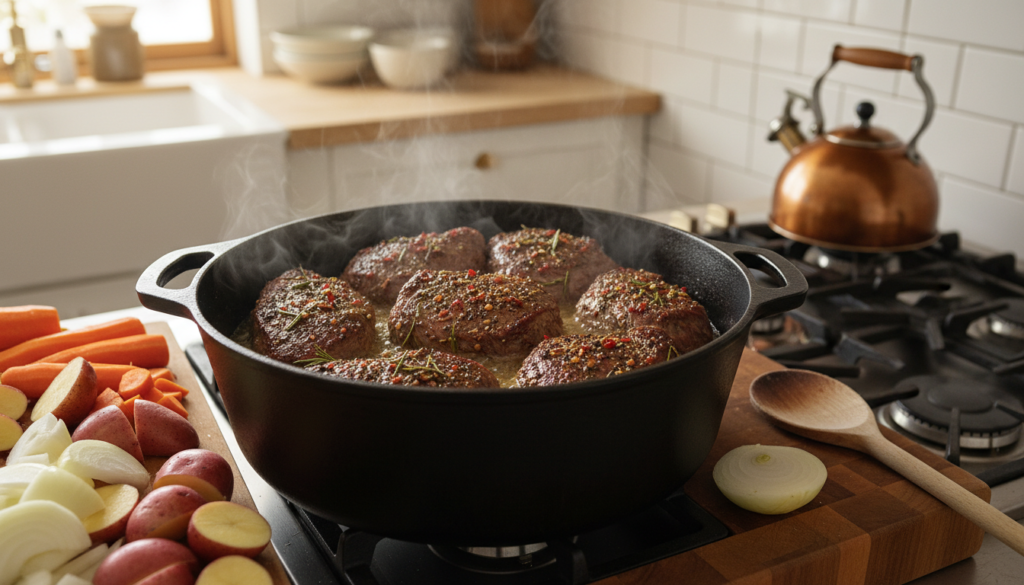
First, pat your beef chuck dry with paper towels. Season it well with salt and pepper. Heat oil in your pot over medium-high heat until it shimmers.
Never crowd the pot—sear beef in small batches for about 10 minutes per batch until all sides turn deep brown. This browning creates caramelized bits, called fond, that will flavor your entire stew. Transfer each batch to a clean plate as it finishes.
Building Your Flavor Base
In the same pot, cook diced onions, carrots, and celery for about 7 minutes until they soften and smell wonderful. Add minced garlic and tomato paste, stirring constantly for 2 minutes. This step creates the aromatic foundation that makes your one pot beef stew taste amazing.
Combining Ingredients and Simmering
Return the beef to your pot. Pour in beef broth, red wine, and Worcestershire sauce. Add fresh thyme sprigs and bay leaves. Bring the mixture to a boil, then immediately reduce heat to low. Cover your pot and let everything simmer gently. Low heat is crucial—boiling will toughen the meat.
Adding Vegetables at the Right Time
After 30 to 45 minutes, when the beef is nearly tender, add cubed potatoes. Simmer covered for another 15 minutes until potatoes become fork-tender. In the final 2 minutes, stir in fresh peas. Remove bay leaves and thyme sprigs before serving your delicious one pot beef stew.
- Sear beef in batches to develop deep flavor
- Cook aromatics until soft and fragrant
- Simmer gently for tender meat
- Add potatoes midway through cooking
- Add peas at the very end
Watch for visual cues as your stew cooks. The beef should easily break apart with a fork, and potatoes should slide off a knife blade without resistance. If your meat still feels tough after the suggested time, simply cover and simmer longer. Your patience will reward you with the perfect bowl of comfort food.
Secret Ingredients That Elevate Your Stew
To make the best beef stew, you need more than just good meat and veggies. The magic happens when you add secret ingredients. These boosters add depth, complexity, and richness, making everyone want more.
What makes a stew great is knowing how to use special ingredients. Each one adds a unique flavor layer. Together, they make your stew unforgettable.
The Power of Tomato Paste and Worcestershire Sauce
Tomato paste is packed with umami, giving your stew a meaty taste. Cooking it until it darkens adds complexity and color. This simple step makes a big flavor difference.
Worcestershire sauce amplifies all the flavors in your stew. It doesn’t stand out as a flavor itself. Instead, it enhances the beefy, rich tastes. It’s a mix of anchovies, tamarind, and vinegar that boosts every flavor.
Together, tomato paste and Worcestershire sauce are a secret duo. They add depth that makes your stew go from good to great.
Red Wine versus Beef Broth
Choosing between red wine and beef broth changes your stew’s taste. Red wine adds acidity, balancing the richness. It also tenderizes the meat and adds depth.
For red wine, pick a light to medium-bodied wine like Pinot Noir or Merlot. You don’t need expensive wine. It cooks down, leaving its flavor without any alcohol taste.
Don’t want to use wine? No problem. Use extra beef broth with a splash of balsamic or apple cider vinegar. This gives the acidity your stew needs without alcohol. Both ways work well.
| Liquid Choice | Flavor Profile | Best Uses | When to Use |
|---|---|---|---|
| Red Wine | Rich, sophisticated, balanced acidity | Special occasions, deeper flavor | When you have quality wine on hand |
| Beef Broth Only | Pure beef flavor, savory | Everyday meals, traditional style | Preferred cooking method |
| Broth with Vinegar | Balanced, bright acidity | Non-alcoholic option, same depth | When avoiding alcohol |
Other ingredients enhance your stew. Brown sugar adds sweetness, balancing the savory. Fresh lemon juice adds brightness. These touches make your stew unforgettable.
- Tomato paste creates umami depth through caramelization
- Worcestershire sauce amplifies all savory flavors
- Red wine offers acidity and sophistication
- Beef broth with vinegar works as an alcohol-free alternative
- Brown sugar balances flavors naturally
- Fresh lemon juice brightens the final dish
Cooking Methods: Dutch Oven, Slow Cooker, or Stovetop
You have three main options for cooking beef stew at home. Each method delivers delicious results, but they work differently. Your choice depends on your equipment, schedule, and cooking style. Let’s explore what works best for your kitchen.
Dutch Oven Method: The Gold Standard
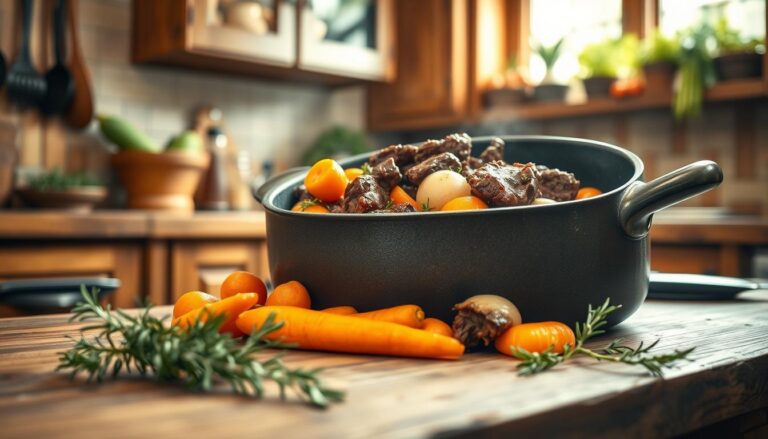
Many experienced cooks prefer the Dutch oven approach. This method combines stovetop searing with oven braising. Heavy, lidded Dutch ovens—particularly enameled cast iron brands like Lodge and Staub—distribute heat evenly across your beef stew ingredients.
Start by searing your meat on the stovetop to build rich flavors. Then transfer your covered pot to a 325°F oven for 1 hour 45 minutes to 2 hours. The surrounding oven heat gently braises your beef until it’s fork-tender. This approach prevents the bottom from burning and requires minimal stirring once the pot goes in the oven.
Stovetop-Only Cooking
The straight stovetop method works well if you lack oven-safe cookware. Simmer your beef stew on the lowest heat setting for 90 minutes. Stir occasionally to prevent sticking and scorching. This hands-on approach gives you direct control over the cooking process.
Slow Cooker Beef Stew
A slow cooker beef stew is perfect for busy schedules. This method offers the ultimate convenience—prepare your ingredients in the morning and return home to a ready meal. Simply add everything to your slow cooker and cook on low for 8 hours.
One consideration: slow cookers don’t allow for the initial searing step that builds deep flavor. You can sear your meat separately on the stovetop first, then transfer it to the slow cooker for more robust results. Without pre-searing, slow cooker beef stew may taste slightly less rich than Dutch oven versions.
| Cooking Method | Total Time | Active Time | Best For | Equipment Needed |
|---|---|---|---|---|
| Dutch Oven (Oven) | 2-2.5 hours | 20 minutes | Best flavor and texture | Enameled cast iron Dutch oven (6-7 quart) |
| Stovetop Only | 2-2.5 hours | 30 minutes | Direct heat control | Heavy pot with lid |
| Slow Cooker | 8 hours | 15 minutes | Maximum convenience | Slow cooker (6+ quart capacity) |
Choosing Your Method
Consider these factors when deciding:
- Time available: Slow cooker beef stew takes longer but requires minimal active involvement
- Equipment on hand: Dutch ovens provide superior results but require an oven-safe pot
- Flavor preference: Oven methods create deeper, more complex tastes through even heating
- Kitchen setup: Stovetop works anywhere without special equipment
Dutch ovens retain heat really well, making them ideal for braising tough cuts of meat into tender perfection.
All three methods produce satisfying beef stew. Pick the approach that fits your lifestyle and kitchen. Each delivers comfort in a bowl.
Tips for Achieving the Perfect Thick Gravy
The gravy in your beef stew recipe is key to a great meal. Getting the right consistency can be tricky, but there are reliable methods. The trick is to pick the right thickening method for your cooking and ingredients.
Natural Thickening with Potatoes
Letting potatoes thicken your stew is easy. Starchy potatoes, like baby potatoes, release starch as they simmer. This makes a silky, velvety gravy without flour or cornstarch.
This method is loved by many home cooks. The broth coats your spoon beautifully and feels lighter than flour-based gravies. Your stew becomes naturally thickened, thanks to simple cooking chemistry.
- Potato starch releases gradually during simmering
- Creates a smooth, elegant texture
- No raw flour taste to worry about
- Perfect for home cooks avoiding extra thickeners
When to Use Cornstarch or Flour
At times, you need a backup plan for your stew. Flour works well when added early. Coat your vegetables and aromatics with flour, then cook for one to two minutes. This removes any raw flour taste.
If your stew is too thin, cornstarch is the answer. Mix one tablespoon of cornstarch with one tablespoon of cold water. Stir this into your stew and cook for three minutes until thickened.
| Thickening Method | Best For | Application Timing | Special Notes |
|---|---|---|---|
| Potato Starch | Natural, lighter gravy | Throughout cooking | No additional ingredients needed; perfect for gluten-free diets |
| All-Purpose Flour | Traditional, integrated flavor | At the beginning | Cook 1-2 minutes before adding broth; less likely to separate when freezing |
| Cornstarch Slurry | Quick fix for thin stew | At the end | Creates glossier finish; gluten-free option; may separate when freezing |
Let your stew rest for ten minutes before serving. This resting time helps everything come together beautifully. Choose the method that fits your cooking style and dietary needs.
What to Serve with Your Hearty Beef Stew
Beef stew is the ultimate comfort food for winter. It’s a complete meal with protein, veggies, and warmth. Just a bowl of it makes guests feel full and happy.
Adding the right sides can make the meal even better. The noodles and veggies soak up the gravy, making every bite special. Simple additions can enhance the rich flavors you’ve worked on.
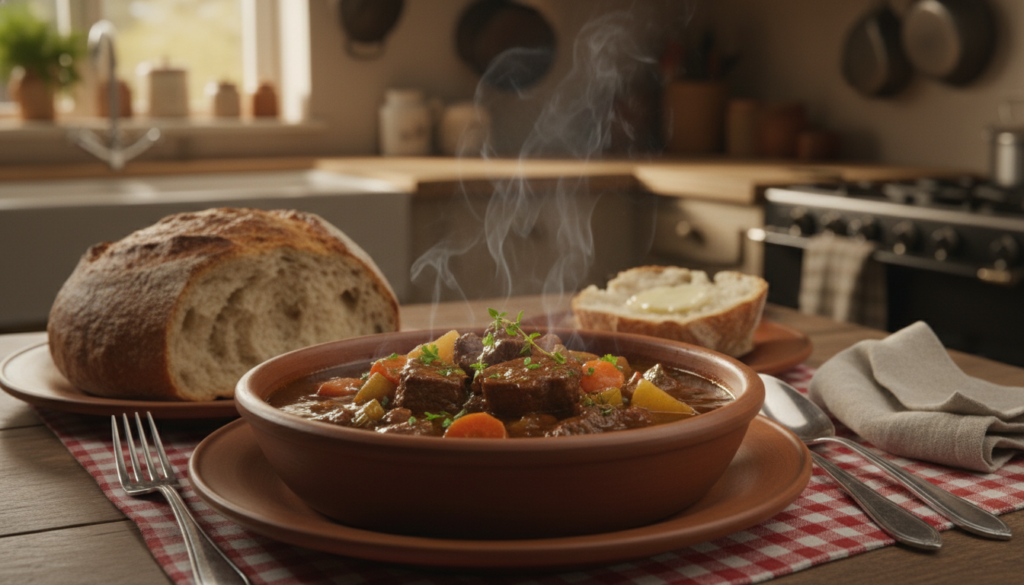
- Al dente egg noodles that soak up every drop of savory gravy
- Creamy mashed potatoes for an indulgent presentation
- Crusty sourdough bread or French bread for dunking
- Garlic mashed potatoes for extra flavor depth
- Goat cheese-stuffed dinner rolls for special occasions
- Fresh green salad with tangy vinaigrette to cut the richness
- Roasted root vegetables for added color and nutrition
- Garlic bread for dipping into the delicious broth
| Serving Option | Best For | Flavor Profile |
|---|---|---|
| Egg Noodles | Weeknight dinners and meal prep | Neutral base that absorbs gravy |
| Mashed Potatoes | Family gatherings and comfort dining | Creamy and filling |
| Sourdough Bread | Casual meals and everyday cooking | Tangy and hearty |
| Green Salad | Lighter presentations and balance | Fresh and crisp contrast |
| Dinner Rolls | Elegant dinners and special occasions | Soft, buttery, and luxurious |
Bread is key to your winter comfort food spread. Sourdough’s crusty outside is perfect for soaking up broth. Homemade dinner rolls add elegance to your meal.
Choosing the right drinks is important too. Serve the same red wine used in cooking for a fancy touch. Sparkling water with lemon is also great with this hearty meal.
Beef stew is versatile and warm. It’s perfect for any occasion, whether you keep it simple or add fancy sides. It brings everyone together, making them feel grateful and full.
Storage and Make-Ahead Instructions
Homemade beef stew is even better the next day. The flavors blend and get richer. It’s perfect for meal prep or feeding your family all week. Knowing how to store and reheat your stew ensures you enjoy every batch.
Refrigerating and Freezing Your Stew
Let your stew cool before storing. Never leave it out for more than two hours. Put it in airtight containers and refrigerate for up to four days. The flavors get even better in the cold.
Freezing extends your stew’s life. Use containers or bags with space for expansion. Label them with the date. Your stew will last up to three months in the freezer.
Pro tip: Freeze your stew slightly undercooked. Vegetables will soften more during thawing. Don’t use cornstarch before freezing. Add it when reheating instead.
Reheating Tips for Best Results
Reheat your stew on the stovetop over medium-low heat. Stir occasionally. If it’s too thick, add a little beef broth or water.
If frozen, thaw overnight in the fridge. Then reheat on the stovetop. Microwaving works, but stovetop reheating tastes fresher.
| Storage Method | Duration | Reheating Method |
|---|---|---|
| Refrigerator | Up to 4 days | Stovetop over medium-low heat |
| Freezer | Up to 3 months | Thaw overnight, then stovetop |
Mastering storage and reheating makes your homemade beef stew a convenient meal. Enjoy restaurant-quality taste from your kitchen for days or months.
Conclusion
You now have all the info to make a delicious beef stew, just like the ones in restaurants. This recipe combines tender beef, soft veggies, and rich gravy in a special way. You can choose from Dutch oven, slow cooker, or stovetop methods, all leading to a tasty meal your family will adore.
This recipe has over 200 five-star reviews from home cooks who perfected it. It’s perfect for when it gets cold outside, filling your home with warmth and great smells. You can serve it to guests, pack it for lunch, or freeze it for a quick comfort food fix. Every bite is a reminder of why beef stew is a must-have in your cooking routine.
Feel free to make this recipe your own. Try different veggies, herbs, or serve it over rice. The base is solid, so you can play around and find your favorite way. Share your creations online, talk about your favorite tweaks, and save this recipe for your next cozy night in. Your family is ready for a warm, comforting bowl of this stew, showing how much you care.