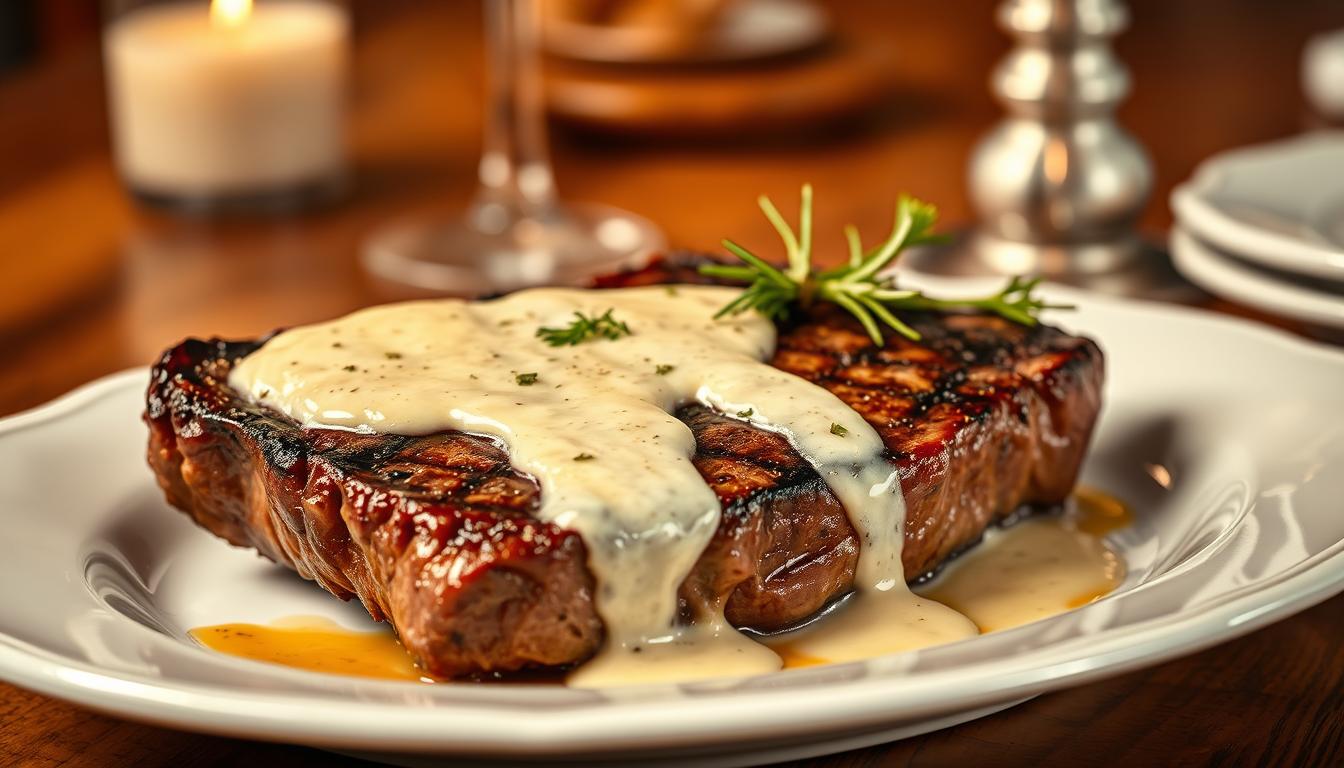
How to Make Juicy Steak with Creamy Garlic Sauce Easily
You can make a juicy steak with creamy garlic sauce in under 30 minutes. This recipe uses basic ingredients and a simple cooking method. It’s perfect for cooking for two or impressing guests.
Seared steak is the key to this dish. The brown bits in the pan make a rich, velvety sauce. This recipe is easy to make and feels fancy, yet it’s simple.
Your kitchen will smell amazing as the sauce develops. The perfect steak with silky sauce makes a memorable dinner. It’s quicker than ordering takeout.
Key Takeaways
- Complete recipe takes just 30 minutes from start to finish
- One-pan method means minimal dishes to wash
- Works for two people or easily scales up for more
- No special equipment or advanced cooking techniques needed
- Delivers steakhouse-quality results in your own kitchen
- The sauce is rich enough to make extra portions
- Suitable for weeknight dinners and special occasions
Why This Juicy Steak with Creamy Garlic Sauce Will Become Your Go-To Recipe
This steak recipe is a hit on dinner tables across America. Your guests will want the recipe before they leave. It’s simple to make restaurant-quality steak at home, no special kitchen or skills needed.
It’s quick, ready in under 30 minutes. Perfect for busy weeknights or special events.
It’s easy to clean up, thanks to one-pan cooking. You can use ribeye or sirloin, depending on your budget. It works with many beef cuts, so you can use what’s on sale.
Restaurant-Quality Results in Your Own Kitchen
The secret to great steak is searing and making the sauce. Searing creates a golden crust that keeps juices in. The brown bits, or fond, add flavor to your sauce.
By making the sauce in the same pan, you get rich flavor. The fond, garlic, butter, and cream mix together for a special taste. This method is easy and doesn’t need fancy equipment.
Perfect for Weeknight Dinners and Special Occasions
This recipe is great for busy weeknights. It’s quick, ready in 30 minutes. It’s also fancy enough for Saturday night guests.
It’s versatile for meal planning. Here are some ways to use it:
- Quick weeknight meals when you need dinner fast
- Impressive dishes for entertaining friends and family
- Special occasion dinners without advanced preparation
- Easy beef pasta dinner alternatives when paired with noodles
Your steak is perfect for any event. It looks great and tastes amazing. This shows that you can have restaurant-quality steak on weeknights too.
What Makes This Steak Recipe So Incredibly Delicious
This dish is a perfect mix of seared beef and a rich garlic cream sauce. When you sear the steak at high heat, something magical happens. The meat’s proteins and sugars react, creating deep flavors and a golden crust.
This crust keeps the juices inside, adding depth to your steak. The real magic happens after searing. The browned bits at the bottom of the pan are called fond. They’re packed with flavor.
When you deglaze the pan with beef stock, these bits turn into liquid gold. This liquid becomes the base of your garlic cream sauce.
Your garlic cream sauce is a perfect blend of ingredients:
- Heavy cream makes it silky and rich
- Fresh garlic adds a strong aroma and warmth
- Parmesan cheese brings umami and saltiness
- Dijon mustard adds depth and a subtle tang
- Lemon juice adds brightness with acidity
- Butter makes it velvety
This sauce is rich but not heavy, unlike some pasta sauces. The lemon juice keeps it from feeling flat. Optional chili flakes add a nice warmth without overpowering the other flavors.
Each ingredient has its role. The cream and butter make it luxurious, while garlic and mustard add complexity. Parmesan adds savory notes that make you crave more. When combined with the fond from the steak, it’s like dining at a top restaurant at home.
Essential Ingredients for Your Creamy Garlic Steak
Choosing the right ingredients is key when cooking steak at home. You need top-notch beef, fresh spices, and the best parts for your heavy cream sauce. Starting with the best items ensures your dish will be top-notch.
Choosing the Right Cut of Beef
The beef cut you pick is crucial. You have three great options for this recipe.
| Beef Cut | Fat Content | Flavor Profile | Best For | Price Range |
|---|---|---|---|---|
| Ribeye Steak | High marbling | Rich and bold | Maximum flavor and juiciness | Premium |
| Sirloin Steak | Moderate fat | Good beefy taste | Budget-conscious cooks | Moderate |
| Filet Mignon | Low fat | Mild and tender | Texture over flavor | Very Premium |
A ribeye steak has the most flavor because of its fat. This fat makes the steak moist and tasty. If you choose ribeye, you get the richest taste that goes well with heavy cream sauce.
The sirloin steak is a great value. It offers good flavor without the high cost. It’s perfect for weeknight dinners when you want something tasty but affordable.
Choose steaks that are eight ounces each and one to one and a half inches thick. This size cooks evenly and ensures juicy results.
The Secret to That Rich, Velvety Sauce
Your heavy cream sauce makes the dish special. Quality is important for every sauce ingredient.
- Heavy cream gives you the velvety texture you want. Use real heavy cream for the best taste
- Fresh garlic cloves add a strong flavor that jarred garlic can’t match
- Real Parmesan cheese that you grate yourself melts better and tastes better than pre-grated cheese
- Beef stock adds a savory depth that brings everything together
- Dijon mustard adds complex flavor without being spicy
- Fresh lemon juice balances the richness, making the sauce feel light and fresh
You’ll need two ribeye or sirloin steaks, one tablespoon olive oil, one tablespoon butter, salt and black pepper, four minced garlic cloves, half a cup of heavy cream, one quarter cup beef stock, one quarter cup grated Parmesan, one teaspoon Dijon mustard, one teaspoon lemon juice, optional chili flakes, and fresh chopped parsley.
The difference between good steak and great steak lives in the details. Fresh ingredients and proper cuts make your creamy pasta with beef or your heavy cream sauce taste like it came from a professional kitchen.
Starting with quality ingredients means you’re already on the right path. Your steak will cook perfectly, and your sauce will be amazing.
Preparing Your Steak for Maximum Juiciness
The secret to a delicious steak starts before you heat your pan. Proper preparation is key for that perfect crust and tender inside. Unlike quick beef pasta skillet recipes, steak needs patience and detail. These steps make a good steak great.
Bringing your steak to room temperature is crucial. Take it out of the fridge 30 minutes before cooking. A room temperature steak cooks evenly, unlike cold meat. This ensures perfect doneness all the way through.
Before cooking, pat your steaks dry with paper towels. This step is absolutely critical. Moisture stops browning and creates steam instead of a golden crust. Dry steaks brown well and get that great sear.
Follow these essential preparation steps:
- Remove steaks from refrigerator 30 minutes before cooking
- Pat steaks dry with paper towels on both sides
- Rub lightly with olive oil to help seasonings adhere
- Season generously with kosher salt and freshly ground black pepper
- Season just before cooking to prevent moisture loss
Use kosher salt or sea salt for better flavor. Freshly ground black pepper tastes better than pre-ground. Don’t be shy with seasoning—it enhances flavor during cooking.
Step-by-Step Guide to Searing the Perfect Steak
Learning to pan-sear a steak can take your cooking to the next level. It’s all about controlling the heat, timing, and creating that perfect golden crust. These skills are essential for a great weeknight dinner or a dinner party.
Getting That Beautiful Golden Crust
Start by preheating your skillet. Set it over medium-high heat for 2-3 minutes until it’s hot. Test the pan by dropping a small amount of water. If it sizzles and evaporates fast, it’s ready.
Put butter in the hot pan and wait for it to foam. This means you’re ready to add your steaks. Place them in the pan and don’t move them for 3-4 minutes. This helps create a nice crust.
After 3-4 minutes, the steak should release from the pan easily. This is when you flip it. The Maillard reaction creates a delicious caramelized crust.
Cooking Times for Your Preferred Doneness
Knowing the right cooking times makes cooking easier. For a 1-inch thick steak, cook each side for 3-4 minutes for medium-rare.
| Doneness Level | Internal Temperature (Fahrenheit) | Internal Temperature (Celsius) | Cooking Time Per Side | Center Appearance |
|---|---|---|---|---|
| Rare | 125°F | 52°C | 2-3 minutes | Cool red center |
| Medium-Rare | 135°F | 57°C | 3-4 minutes | Warm red center |
| Medium | 145°F | 63°C | 4-5 minutes | Warm pink center |
| Well-Done | 160°F | 71°C | 5-6 minutes | Brown throughout |
Use a meat thermometer to check the steak’s temperature. Insert it into the thickest part, avoiding the bone. This ensures your steak is cooked just right.
After cooking, move the steak to a plate and cover it with foil. Let it rest for 5 minutes. This makes the steak juicy and tender.
These cooking times are perfect for any steak dish, like one pot beef pasta. Mastering this technique will make your steaks as good as those at a steakhouse.
Creating the Irresistible Creamy Garlic Sauce
The magic of your steak dinner happens after the meat leaves the pan. This is where you’ll master the pan sauce technique. It turns your skillet into a flavor powerhouse. The secret starts with never washing your pan after searing the steaks.
Those browned bits stuck to the bottom are pure gold for flavor. You need them for your creamy garlic sauce.
Building your creamy garlic sauce takes just a few minutes but delivers restaurant-quality results. The pan sauce technique relies on the caramelized residue left from cooking. It dissolves into your sauce and creates incredible depth.
This method works beautifully for comfort food pasta recipes. You can drizzle extra sauce over noodles alongside your steak.
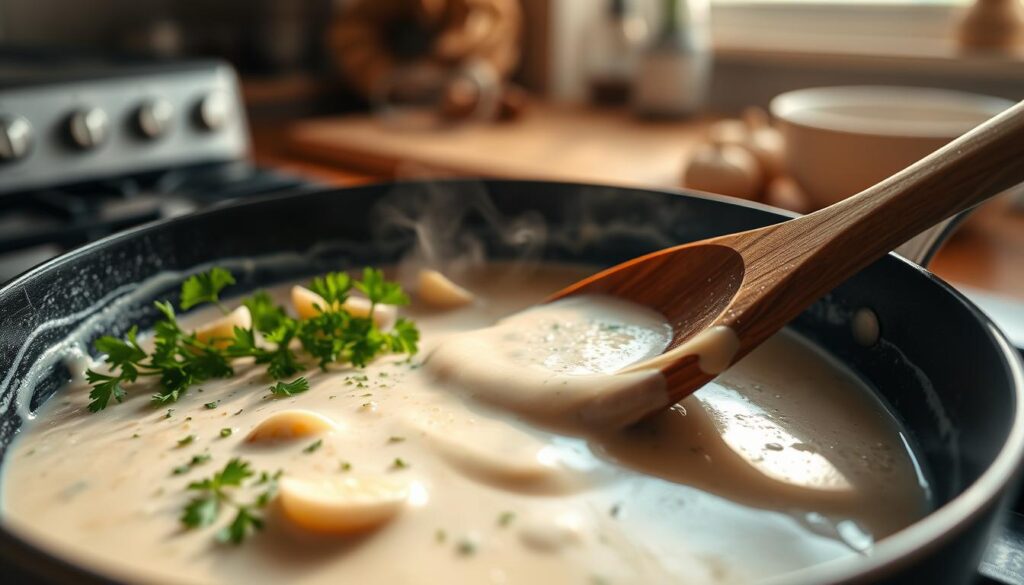
The Sauce-Making Process
Start by turning your heat down to medium. Add minced garlic and cook for just 30 seconds until you smell that wonderful fragrance. Be careful not to overcook it, or the garlic turns bitter and ruins your sauce.
Pour in beef stock next and use a wooden spoon to scrape up all those flavorful brown bits from the pan bottom. This deglazing step dissolves all that concentrated flavor into your liquid base. Add heavy cream slowly and watch it bubble gently for 2-3 minutes as it thickens into something silky and luxurious.
- Stir in grated Parmesan cheese until it melts completely
- Add a dollop of Dijon mustard for subtle complexity
- Sprinkle in chili flakes if you want a little heat
- Squeeze fresh lemon juice last to brighten the flavors
Your creamy garlic sauce should coat the back of a spoon. If it looks too thick, splash in a bit more stock. If it seems too thin, let it simmer a minute longer to reduce and thicken up.
Expert Tips for Foolproof Steak Every Single Time
Cooking a perfect steak is more than just following steps. You need to understand the science behind each technique. This section shares professional knowledge to help you cook like a pro. Whether it’s for a weeknight meal or impressing guests, these tips will make a big difference.
Temperature Control and Timing Secrets
Getting the right temperature is key when cooking steak. Using a meat thermometer is your best tool. It removes all guesswork and prevents overcooking your expensive cut of beef.
Insert the thermometer into the thickest part of the meat, away from bones, for accurate readings.
Here are the target internal temperatures you should aim for:
| Doneness Level | Internal Temperature | Result |
|---|---|---|
| Rare | 52°C (125°F) | Cool red center, soft texture |
| Medium-Rare | 57°C (135°F) | Warm pink center, ideal for most |
| Medium | 63°C (145°F) | Warm throughout, slight pink |
| Medium-Well | 68°C (155°F) | Mostly cooked, minimal pink |
| Well-Done | 73°C (165°F) | Fully cooked, no pink |
Never skip the resting period. After reaching your target temperature, remove the steak from heat and let it rest for five minutes. This waiting time is crucial. The muscle fibers relax and reabsorb the juices throughout the meat. If you cut immediately, all those delicious juices run onto your plate instead of staying in your steak.
Heat management matters a lot. Start with high heat to create that beautiful golden crust. Once you add the garlic and cream, reduce to medium heat. High heat with garlic causes burning, which ruins your sauce’s flavor completely.
Common Mistakes to Avoid
Understanding steak cooking mistakes helps you avoid disaster. Here are the biggest errors home cooks make:
- Using wet steaks without patting them dry first
- Cooking straight from the refrigerator without reaching room temperature
- Moving the steak constantly while it’s searing
- Skipping the rest period entirely
- Burning the garlic in your sauce
- Boiling cream too vigorously, causing splitting
- Washing the pan before making sauce and losing flavor
- Not using enough salt and pepper for seasoning
- Crowding the pan with too many steaks at once
Dry steaks are essential before cooking. Moisture prevents browning and creates steam instead of a crust. Pat your steaks thoroughly with paper towels.
Building flavors in the same pan is crucial. After removing your steak, scrape up all those browned bits from the bottom. These bits carry intense flavor. They’re the foundation of your creamy garlic sauce. This technique works beautifully whether you’re making family dinner pasta ideas or elegant steak preparations.
“The difference between good steak and great steak is often just temperature control and patience.”
Watch your garlic carefully. It burns quickly and turns bitter. Keep cream gentle—never let it boil rapidly. Add lemon juice at the very end to maintain that zingy brightness. These final details elevate your dish from good to exceptional.
Best Side Dishes to Serve with Your Steak
Your juicy steak with creamy garlic sauce needs the perfect sides. The right choices make a great meal unforgettable. You’ll want every drop of sauce on your plate.
Mashed potatoes with steak is a classic choice. Their creamy texture is perfect for the sauce. Warm mashed potatoes soak up the flavors, making every bite special. It’s like dining at a fancy steakhouse at home.
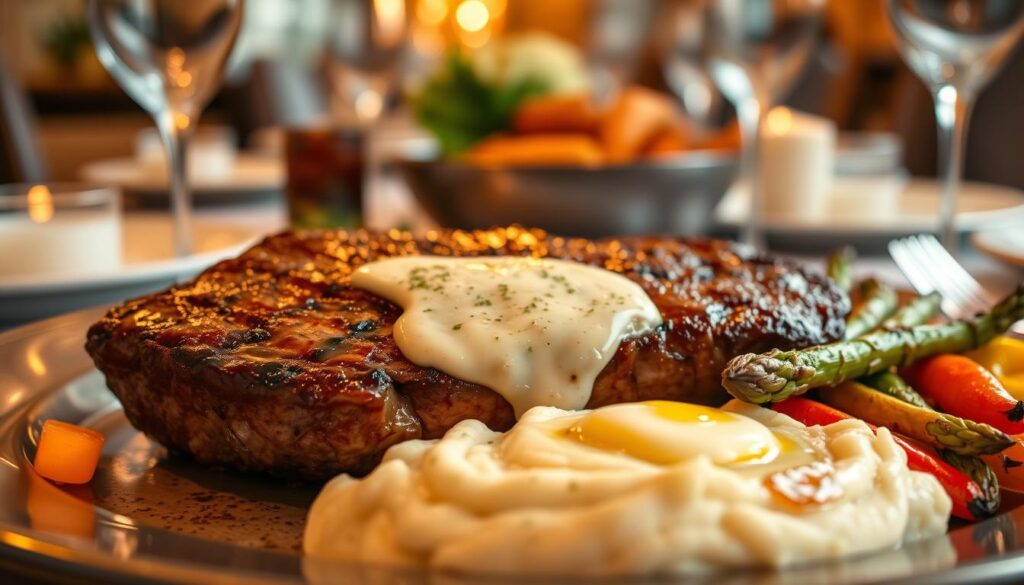
- Crispy French fries or steak fries for dipping and texture
- Roasted vegetables like asparagus, Brussels sprouts, or green beans
- Fresh green salad with vinaigrette to balance the meal
- Garlic bread or crusty bread for extra sauce
- Sautéed mushrooms for earthy flavors
- Creamed spinach for a classic steakhouse feel
- Roasted garlic butter potatoes for extra flavor
Savory beef noodles are also a great side. They pair well with steak and soak up the sauce nicely.
| Side Dish | Texture | Best For |
|---|---|---|
| Mashed potatoes with steak | Creamy and soft | Sauce absorption |
| French fries | Crispy outside, tender inside | Dipping and contrast |
| Roasted vegetables | Caramelized and tender | Nutrition and color |
| Green salad | Fresh and light | Cutting richness |
Make sure your plate has a mix of starchy sides and fresh veggies. This way, you have plenty of surfaces for the sauce. Aim for a balanced, restaurant-quality look that makes every bite memorable.
Variations and Substitutions You Can Try
This creamy garlic sauce recipe is super flexible. You can use it with many different proteins and adjust the flavors to match your taste. Whether you want to swap out the steak or tweak the sauce, this recipe adapts beautifully to your kitchen needs and dietary choices.
Alternative Proteins That Work Beautifully
You don’t need steak to enjoy this rich, savory sauce. Chicken with cream sauce delivers restaurant-quality results when you use boneless, skinless chicken breasts. Pound them to an even thickness of about three-quarters of an inch. Cook each side for 6 to 7 minutes until the internal temperature reaches 165°F.
Pork chops with garlic sauce pair wonderfully with this creamy preparation. Whether you choose bone-in or boneless pork chops, cook them for 4 to 5 minutes per side until they reach 145°F internally. The garlic-infused cream clings beautifully to the meat’s texture.
You can also try thick fish fillets like halibut or salmon. These need shorter cooking times, typically 3 to 4 minutes per side. Using a meat thermometer takes the guesswork out of cooking times regardless of which protein you select.
Adjusting the Sauce to Your Taste
Your homemade creamy pasta sauce can become a signature creation by making simple adjustments. If you prefer a lighter sauce, use half-and-half instead of heavy cream. Keep in mind that the sauce won’t be as thick and may need extra simmering time to thicken properly.
Here are quick modifications you can make:
- Add fresh herbs like thyme or rosemary for earthy depth
- Increase garlic for a bolder punch
- Mix in sliced mushrooms for an umami boost
- Add lemon juice for brightness and tang
- Stir in red chili flakes or cayenne for heat
- Use coconut cream and nutritional yeast for dairy-free options
If your sauce becomes too thick, thin it with beef broth or chicken stock. For thin sauce, simmer longer or mix cornstarch with cold water to create a slurry. Stir this mixture into your sauce for immediate thickening without lumps.
| Protein Option | Cooking Time Per Side | Internal Temperature | Best Thickness |
|---|---|---|---|
| Chicken Breasts | 6-7 minutes | 165°F | ¾ inch |
| Pork Chops | 4-5 minutes | 145°F | ¾-1 inch |
| Fish Fillets | 3-4 minutes | 145°F | 1 inch |
| Steak | 4-6 minutes | 130-135°F (medium-rare) | 1-1.5 inches |
Your creamy garlic sauce transforms any protein into a restaurant-worthy meal. Experiment with different combinations until you find your perfect match.
Storing and Reheating Your Leftover Steak
You’ve made a delicious steak with creamy garlic sauce, and now you want to enjoy it again tomorrow. Proper leftover steak storage keeps your meal fresh and safe to eat. Leftovers will stay good in your refrigerator for up to three days when stored correctly in an airtight container.
Let your steak and sauce cool to room temperature before putting them away. Don’t leave them sitting on the counter for more than two hours. This food storage tips approach prevents bacteria growth and keeps your meal safe.
Best Storage Methods
Store your steak and sauce separately whenever possible. This prevents the meat from becoming soggy and keeps the flavors fresh. Use airtight containers so the garlic smell doesn’t spread to other foods in your fridge.
- Keep steak and sauce in separate containers
- Use airtight containers for freshness
- Label containers with the date stored
- Store in the coldest part of your refrigerator
How to Reheat Your Steak Properly
Reheating steak the right way keeps it tender and juicy. Use your oven for best results. Place the steak in a baking dish, cover it with foil, and warm it at 250°F for about ten minutes. You can also use a skillet over low heat for two to three minutes on each side.
Never use a microwave for reheating steak. This method tends to overcook and toughen the meat. Reheat your creamy garlic sauce separately in a small saucepan over low heat. Stir frequently to prevent the sauce from splitting or curdling. Add a splash of cream or stock if you need to restore the right consistency.
| Reheating Method | Temperature | Time | Best For |
|---|---|---|---|
| Oven | 250°F | 10 minutes | Even, gentle heating |
| Skillet | Low heat | 2-3 minutes per side | Quick reheating |
| Microwave | N/A | 2-3 minutes | Not recommended |
Freezing Your Steak for Later
You can freeze cooked steak for up to three months. Wrap it tightly in plastic wrap and then in foil to prevent freezer burn. Thaw your steak in the refrigerator overnight before reheating. The sauce doesn’t freeze well because cream tends to separate, so it’s best to make fresh sauce each time.
Conclusion
You now have all you need to make a juicy steak with creamy garlic sauce. This recipe is quick, taking just 30 minutes. You don’t need fancy tools or skills. A simple skillet and a meat thermometer are enough to wow your family and guests.
This homemade steak dinner is easy to make. It’s a one-pan meal, so cleaning up is a breeze. The sauce is made from the steak’s drippings, adding amazing flavor. Remember to dry your steaks well, don’t move them while searing, use a meat thermometer, and let the steak rest. These steps are key to a great result.
Once you get the hang of this, you’ll be able to cook perfect steak anytime. The creamy garlic sauce is so tasty, you’ll want to make it over and over. Feel free to try different variations. Adjust the garlic to your liking. Serve it with your favorite sides. Make it your own.
This recipe shows that you don’t need complicated or time-consuming cooking to impress. Sometimes, the simplest recipes are the most satisfying. Your steak recipe will soon be a favorite. Start cooking tonight and enjoy the homemade taste.