Best Baked Salmon Recipes for Easy Weeknight Dinners
Getting dinner ready fast doesn’t mean you have to sacrifice taste or nutrition. Baked salmon recipes are perfect for busy families. They offer a high-quality meal in under 30 minutes, with just 5 to 10 minutes of prep.
Whether you’re a pro in the kitchen or new to cooking fish, weeknight salmon meals fit your schedule. Baking salmon is simple. You just need basic ingredients, a hot oven, and confidence in your cooking.
From the Pacific Northwest to all over the country, baked salmon is a favorite. It’s great for casual nights or when you’re hosting guests. Your family gets healthy protein, omega-3s, and meals that taste like they took hours to make.
This guide will teach you all about baking salmon. You’ll learn how to choose the best fish, master simple cooking methods, and find many flavor combinations. This keeps your dinner routine exciting.
Key Takeaways
- Baked salmon requires minimal prep time and delivers impressive results in under 30 minutes
- This protein works for both experienced cooks and complete beginners preparing fish for the first time
- A baked salmon recipe offers versatility that suits casual dinners and special occasions
- Weeknight salmon meals provide essential nutrients including omega-3 fatty acids and lean protein
- Simple ingredients and basic techniques guarantee success every single time you bake salmon
- Cleanup is minimal, making this meal perfect for busy schedules
Why Baked Salmon Is Your Weeknight Dinner Solution
A healthy salmon dinner is perfect for busy lives. Baked salmon is quick, easy, and nutritious. It’s a great choice for weeknights because it’s fast and simple.
Quick Preparation for Busy Schedules
Preparing baked salmon takes just five minutes. You can go from cutting board to oven in no time. Recipes bake in 15 to 25 minutes, beating takeout times.
It’s easy to prepare. Season the salmon, add toppings, and bake. You can do other things while it cooks. No need to stand over the stove or stir constantly.
Nutritional Benefits of Salmon for Your Family
Salmon is great for your family’s health. It’s full of omega-3s for heart and brain health. You also get protein, selenium, potassium, and vitamin A.
Salmon fights inflammation and lowers blood pressure. It reduces disease risks and protects your heart. Omega-3s also help with weight control and brain health.
- Rich in omega-3 fatty acids for heart health
- Excellent source of lean protein
- Contains selenium for bone strength
- Provides potassium for blood pressure support
- Helps reduce inflammation throughout your body
Versatility That Works for Any Occasion
Baked salmon is perfect for any meal. It’s simple to make and works for any occasion. Try it with Mediterranean veggies and lemon one night, and Asian flavors the next.
It pairs well with many sides. Choose from roasted veggies, rice, quinoa, or salads. The mild flavor lets you experiment with different toppings and seasonings.
Essential Ingredients for Perfect Baked Salmon
Making a tasty baked salmon recipe is easy. You probably have most of what you need at home. Baking salmon is simple because quality ingredients make it great. You don’t need fancy techniques or long shopping lists.
Begin with a fresh salmon filet. This is the key to a great dish. Then, add layers of flavor that highlight the fish.
Core Components You’ll Need
Every baked salmon recipe needs these basic things:
- Salmon filet — your main protein and star ingredient
- Olive oil or melted butter — keeps the fish moist during cooking
- Fresh lemon — both sliced for roasting and juiced for brightness
- Garlic — fresh chopped or powder for depth
- Salt and black pepper — basic seasoning that enhances natural flavors
- Fresh herbs — rosemary, thyme, dill, or parsley for aromatic flavor
Lemon and herbs make salmon taste amazing. The lemon’s acidity balances the fish’s richness. It also brings out the salmon’s natural sweetness.
Optional Additions for Extra Dimension
Once you know the basics, these ingredients can make your salmon even better:
- Brown sugar or honey — adds subtle sweetness that balances the fish
- Paprika — brings mild warmth and appealing color
- Fresh garlic cloves — more intense than powder
- Dried oregano — Mediterranean-inspired flavor
Your lemon herb salmon doesn’t need fancy extras. Fresh ingredients taste better than processed ones. Quality is more important than quantity when using premium salmon fillets.
How to Choose the Best Salmon for Baking
Choosing the right salmon is key to a great bake. You’ll find many types at the store. Knowing the differences helps pick the best for dinner.
Understanding the Five Types of Pacific Salmon
There are five main Pacific salmon types. Each has unique qualities for baking.
- Chinook salmon (also called king salmon) is thick, buttery, and rich—perfect for baking, though it costs more
- Sockeye salmon offers bold, rich flavor with a lean, meaty texture that holds up beautifully in the oven
- Coho salmon sits right in the middle, giving you balanced flavor and reasonable pricing
- Pink salmon is usually canned and not ideal for fresh baking
- Chum salmon gets mostly used for roe production
For weeknight baking, choose Chinook, sockeye, and coho. Wild sockeye from Bristol Bay, Alaska, is known for its lean texture and bold taste.
Wild-Caught vs. Farmed Salmon: What You Need to Know
Wild caught salmon tastes better and is firmer. Farm-raised Atlantic salmon is fattier and less nutritious. It can become soft or watery when cooked.
Look for Marine Stewardship Council certifications. Check Monterey Bay Aquarium’s Seafood Watch for sustainable choices.
Fresh vs. Frozen: Making the Right Choice
Frozen salmon is just as good as fresh. Most fish is flash-frozen right after catching.
When choosing, check labels. You should only see “salmon” listed. Frozen salmon thaws best in the fridge overnight, keeping it firm and tasty for baking.
| Salmon Type | Flavor Profile | Texture | Best For | Price Range |
|---|---|---|---|---|
| Chinook (King) | Rich and buttery | Thick, tender | Premium baking dishes | High |
| Sockeye | Bold and meaty | Lean, firm | Everyday baking | Medium |
| Coho | Balanced and mild | Medium-firm | Family dinners | Medium |
| Wild Caught | Deeper, natural flavor | Firmer throughout | Quality-focused meals | Higher |
| Farm-Raised | Milder flavor | Softer, can be watery | Budget-conscious meals | Lower |
Both fresh and frozen salmon are good for baking. The key is choosing quality fish and proper storage. Your choice depends on your schedule, budget, and taste preferences.
Step-by-Step Guide to Baking Salmon in the Oven
Learning to bake salmon is easy. This guide will show you how to make a delicious oven baked salmon dinner. It’s quick and your family will love it.
Start by letting your salmon rest at room temperature for about 10 minutes. This helps it cook evenly. While it warms up, preheat your oven and get your baking sheet ready.
Preparing Your Baking Sheet
Line your sheet pan with aluminum foil for easy cleanup. If you’re using lemon slices or acidic ingredients, add parchment paper on top. This keeps the foil from reacting with acidic foods. Place fresh lemon slices and herbs on the pan for flavor.
Seasoning Your Salmon
Put your salmon skin-side down on the pan. Drizzle olive oil or melted butter over the top. Sprinkle salt, pepper, garlic, and herbs on the surface. Rub them gently into the flesh for even flavor.
Baking at the Right Temperature
The right temperature for baked salmon depends on its size. Here’s a guide for perfect results:
| Salmon Size | Temperature | Cooking Time |
|---|---|---|
| Individual 6-oz portions | 400-425°F | 12-14 minutes |
| 2-pound side | 375°F | 15-20 minutes |
| 3-pound filet | 350°F | 25 minutes |
Creating a Foil Packet Method
For a different method, make a sealed foil packet. Spray the foil with cooking spray and add herbs and lemon slices. Place your seasoned salmon on top. Add garlic and herbs. Fold the sides, leaving room for air. Bake at 375°F for 15-20 minutes. Open the foil to release steam.
Finishing Your Salmon
To get a nice caramelized top, broil your salmon for 3-6 minutes. Watch it closely to avoid burning. The top should be golden brown and crispy. Your salmon is now ready to serve. Let it rest for a few minutes before plating.
- Always check your salmon before removing from the oven
- Broiling time varies based on your oven’s strength
- Keep your oven door slightly open while broiling
- Remove salmon from heat as soon as browning begins
Learning to bake salmon in the oven opens up many dinner options. Your fish will be moist, flaky, and full of flavor every time.
How to Tell When Your Baked Salmon Is Perfectly Done
Knowing when your salmon is done takes the guesswork out of cooking. Many worry about overcooking and getting dry, tough fish. But, checking salmon doneness is simple. You can use several methods to know when it’s ready, whether you’re new or experienced.
It’s important to remember that salmon keeps cooking after you take it out of the oven. This means you should take it out before it looks fully done. Getting the timing right helps avoid overcooking.
Using an Instant-Read Thermometer for Accuracy
An instant-read thermometer is the best tool for checking salmon. The FDA says to cook fish to 145°F. Remove your salmon at 137-140°F and let it rest for five minutes. This will ensure it reaches the safe temperature.
Always check the thickest part of the salmon for the most accurate reading. Insert the thermometer horizontally into the center. This gives you the true internal temperature.
Different doneness levels offer different eating experiences:
- Medium-rare: 115-125°F for a delicate, buttery texture
- Medium: 125-135°F for a balanced, tender bite
- Well-done: 135-140°F for fully cooked flesh
Remember, 140°F is the maximum before salmon becomes dry and loses its appeal.
Visual Cues and Fork Test Methods
Not everyone has a thermometer. Visual methods work well with experience. Look for salmon that starts to flake when pressed gently with a fork. The center should still be slightly translucent for medium-rare.
The fork test checks the texture of cooked salmon. Fully cooked salmon flakes easily. Different salmon varieties show different colors when cooked. Sockeye salmon is deep ruby, while king salmon is lighter pink.
Your preference for salmon doneness is personal, like steak. Some like the tender, slightly translucent center. Others prefer it fully cooked. Practice to find your ideal doneness level. Each time, you learn more about your oven and your preferred texture.
| Doneness Level | Temperature Range | Texture Description | Best For |
|---|---|---|---|
| Medium-Rare | 115-125°F | Slight translucency in center, tender and buttery | Those who prefer delicate salmon |
| Medium | 125-135°F | Mostly opaque with faint center translucency | Balanced cooking preference |
| Well-Done | 135-140°F | Fully opaque, flakes easily with fork | Those who want completely cooked fish |
| FDA Safe Standard | 145°F (after rest) | Fully cooked through | Food safety standard |
With each meal, your salmon doneness test gets easier. Trust your senses, use a thermometer when you can, and enjoy learning what works best for your kitchen.
Classic Baked Salmon with Lemon and Herbs
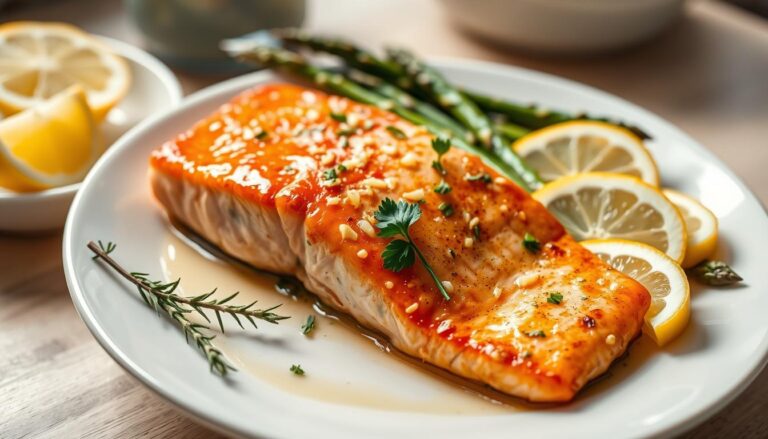
Looking for a salmon recipe that’s easy yet impressive? Try the classic baked salmon with lemon and herbs. It’s quick, under 30 minutes, and perfect for any night. It’s also great for when you have guests over.
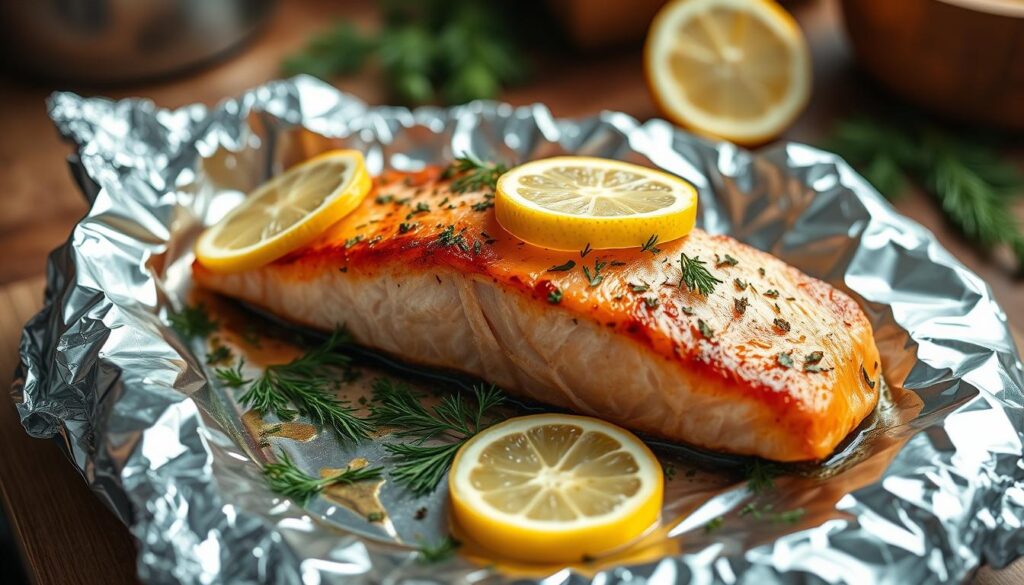
This recipe is simple but flavorful. Start with a 2-pound salmon filet. Add fresh rosemary sprigs and thin lemon slices for extra taste. These ingredients make the fish taste amazing without complicated steps.
- One 2-pound salmon filet
- Fresh rosemary (or thyme, dill, or parsley)
- Two lemons (one sliced, one juiced)
- Two tablespoons olive oil
- Four cloves fresh garlic, chopped
- One teaspoon kosher salt
- One-quarter teaspoon black pepper
Here’s how you cook it:
- Arrange rosemary sprigs and lemon slices on foil
- Place salmon on top, skin-side down
- Drizzle with olive oil and season with salt and pepper
- Scatter chopped garlic over the top
- Juice the second lemon over everything
- Seal tightly in foil and bake at 375°F for 15-20 minutes
- Open foil carefully and broil for 3 minutes for added color
Want a richer taste? Try a garlic butter sauce. Mix softened butter, minced garlic, honey, oregano, and thyme. Pour it over the salmon on lemon slices. Bake at 350°F until done. This adds depth without losing simplicity.
| Ingredient | Amount | Purpose |
|---|---|---|
| Salmon filet | 2 pounds | Main protein foundation |
| Fresh rosemary | 3-4 sprigs | Aromatic herb base |
| Lemon | 2 whole | Flavor and moisture |
| Olive oil | 2 tablespoons | Richness and cooking medium |
| Fresh garlic | 4 cloves | Aromatic depth |
| Kosher salt | 1 teaspoon | Seasoning enhancement |
| Black pepper | 1/4 teaspoon | Subtle spice and flavor |
The foil packet method steams the salmon, keeping it moist. The garlic adds flavor without burning. Two lemons add flavor and balance.
This recipe is flexible and easy to make again and again. You can use different herbs like thyme or parsley. It’s perfect for any occasion, big or small.
Honey Garlic Butter Baked Salmon Recipe
This garlic butter salmon recipe turns a simple dinner into a restaurant-quality dish. The mix of sweet honey and savory garlic makes a glaze that everyone loves. You’ll see how easy it is to make this impressive baked salmon at home with just a few ingredients and simple steps.
Creating the Perfect Sweet and Savory Glaze
The secret to this garlic butter salmon is finding the right balance of flavors. You need melted butter for richness, honey for sweetness, fresh garlic for depth, and herbs for complexity. The butter helps the sauce cling to the fish, letting the flavors meld together.
For your baked salmon recipe, gather these ingredients:
- 6 tablespoons unsalted butter (melted)
- 2 tablespoons honey
- Finely chopped garlic (about 3-4 cloves)
- 1 teaspoon dried oregano
- 1 teaspoon fresh thyme
- Salt and pepper to taste
- Fresh parsley for serving
Whisk these ingredients together in a small bowl. Finely chopping your garlic rather than using powder creates flavor pockets throughout the fish. Whisking makes the glaze smooth. Brown sugar can be used instead for a different caramel taste.
Tips for Achieving Caramelized Perfection
Your baked salmon recipe’s success depends on the right technique and timing. Place salmon fillets on lemon slices, season with salt and pepper, then pour the glaze over each piece. This ensures even flavor and caramelization.
Follow this cooking process:
- Bake at 350°F for about 25 minutes covered
- Broil for 4-6 minutes until golden-brown spots appear
- Watch closely to prevent garlic from burning
The initial covered baking cooks the salmon gently while it absorbs flavors. The final broiling step adds those beautiful golden edges and crispy spots. This makes the garlic butter salmon truly special. Your family will love this kid-friendly recipe that balances the fish’s natural taste with sweet and savory flavors.
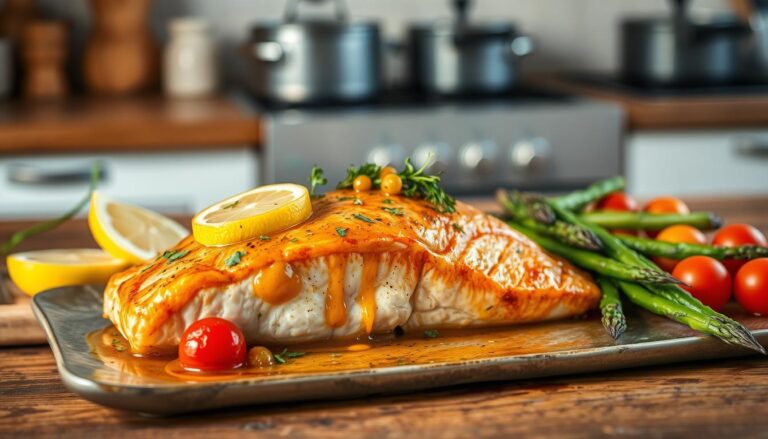
Sheet Pan Baked Salmon with Vegetables
Making a complete meal on one pan makes dinner easy and tasty. Sheet pan salmon with vegetables is perfect for busy families. It combines protein and sides in one dish, saving time and effort.
Timing is key when cooking sheet pan salmon. Choose vegetables that cook as fast as the salmon. Quick options like asparagus and green beans pair well with fish. Even sliced potatoes can be part of the dish if arranged right.
Where you place your salmon and vegetables matters. Put the salmon in the middle for moistness. Place veggies around it for crispy edges. This way, everything roasts well without steaming.
Adding more to your oven might make cooking take longer. Turn your pan halfway through to ensure even browning. This step helps your salmon and veggies cook evenly and look great.
Vegetables soak up the salmon’s juices, making them extra tasty. Season them with herbs and spices for a unified flavor. This makes your meal complete and delicious.
- Herb-roasted potatoes that soak up salmon drippings
- Baby bok choy that becomes tender and slightly caramelized
- Green beans that develop crispy edges
- Broccolini that maintains a pleasant bite while absorbing garlic and lemon flavors
- Cherry tomatoes that burst with concentrated sweetness
This one-pan method brings restaurant-quality food to your home. Your sheet pan salmon is the star of a meal where every part is seasoned and flavored the same.
Flavor Variations to Keep Your Weeknight Dinners Exciting
Mastering the basic baking technique opens up a world of possibilities. You can turn simple salmon dinners into exciting meals by changing seasonings and toppings. New flavors keep your family eager to eat healthy fish all week.
Rotating between different seasoning styles makes weeknights an adventure. Asian dishes add bold, savory flavors. Mediterranean options bring fresh herbs that make salmon taste like a vacation. Spicy and creamy sauces add excitement to busy nights.
Asian-Inspired Teriyaki and Soy Ginger Options
Teriyaki salmon brings Japanese umami flavors to your table. A simple glaze is made by mixing soy sauce, mirin, brown sugar, and ginger. This glaze becomes sweet and savory during baking, coating the fish beautifully.

Soy ginger salmon is a lighter option that highlights fresh flavors. Mix soy sauce, ginger, garlic, sesame oil, and honey. This creates a delicate coating that lets the salmon’s taste shine. Top with sesame seeds and scallions for a real touch.
- Teriyaki glaze: soy sauce, mirin, brown sugar, fresh ginger
- Soy ginger marinade: soy sauce, ginger, garlic, sesame oil, honey
- Marinating time: 15 to 30 minutes before baking
- Finishing touches: toasted sesame seeds and scallions
Mediterranean Style with Pesto and Tomatoes
Pesto salmon brings Mediterranean flavors to your dinner. Coat your salmon with basil pesto before baking. Top with cherry tomatoes and lemon slices. The pesto makes a flavorful crust while keeping the fish moist.
The tomatoes burst in the oven, adding sweet-tart juices to the pesto. Sun-dried tomato pesto is great with salmon. Try olive tapenade or mix fresh tomatoes, olives, capers, and feta for a Greek twist. These variations make pesto salmon feel like a restaurant meal.
| Flavor Variation | Main Ingredients | Cooking Time | Best For |
|---|---|---|---|
| Teriyaki Salmon | Soy sauce, mirin, ginger, brown sugar | 12-15 minutes | Asian cuisine lovers |
| Soy Ginger Salmon | Soy sauce, fresh ginger, garlic, sesame oil | 12-15 minutes | Light, aromatic meals |
| Pesto Salmon | Basil pesto, cherry tomatoes, lemon | 12-15 minutes | Mediterranean preferences |
| Greek-Inspired Salmon | Feta, Kalamata olives, capers, tomatoes | 12-15 minutes | Tangy, briny flavors |
These flavor variations are perfect with your baking technique. You’re just changing the seasonings while keeping the same cooking method. Your family will love salmon dinners because each meal is different.
What to Serve with Your Baked Salmon Dinner
Choosing the right side dishes can elevate your weeknight salmon meals. Baked salmon is versatile and pairs well with many sides. This makes it easy to create a complete meal in under 30 minutes. Whether for your family or meal prep, the right sides are key.
Pair your salmon with one starch and one vegetable for a balanced meal. This combo ensures everyone enjoys their plate. Plus, most sides cook as fast as your salmon, making prep simple.
- Herb roasted potatoes that soak up delicious sauce from your sheet pan
- Creamy smashed potatoes with chili oil for added heat and flavor
- Couscous or quinoa for quick-cooking grain sides
- Wild rice blend for nutty, interesting texture
Now, pick your vegetable sides for color and nutrition:
- Roasted broccolini with crispy, caramelized edges
- Air fryer green beans ready in just 10 minutes
- Seared or steamed bok choy for Asian-inspired elegance
- Fresh green salad with lemon vinaigrette for light contrast
These pairings are perfect for weeknight salmon meals. Planning sides that cook with your fish makes prep easier. Mix and match to create a special dinner without extra work.
Storing and Reheating Leftover Baked Salmon
Your baked salmon dinner doesn’t have to end when the meal is over. With the right storage techniques and creative salmon meal prep strategies, you can transform leftovers into new dishes that taste just as delicious as the original. Knowing how to properly store and use your remaining salmon ensures nothing goes to waste while keeping your family meals exciting and nutritious.
Best Practices for Refrigeration
Let your cooked salmon cool completely at room temperature before storing it. Aim to refrigerate your salmon within two hours to maintain food safety standards. Transfer your leftover salmon into an airtight container or wrap it tightly using plastic wrap or aluminum foil to prevent it from absorbing odors from other foods in your refrigerator.
Properly stored baked salmon stays fresh for one to three days in your refrigerator, with the best quality during the first two days. While you can freeze baked salmon for up to two months, the texture becomes softer and the fishy flavor more pronounced. Reserve freezing for situations where you’ll use the salmon in recipes that tolerate texture changes, such as salmon patties or dishes calling for canned salmon.
When reheating is necessary, let your salmon reach room temperature first. Use a microwave on medium-low power or try the skillet method: heat a nonstick skillet over medium heat, add your salmon with a splash of water, cover immediately, and let it steam for two to four minutes until warmed through.
Creative Ways to Use Salmon Leftovers
Cold or room-temperature salmon often tastes better than reheated portions, giving you plenty of leftover salmon ideas for your weekly meal planning. Enjoy your salmon straight from the refrigerator over mixed green salads with a lemon vinaigrette for quick protein-packed lunches.
Incorporate salmon into your salmon meal prep routine with these simple options:
- Flake salmon and scramble it with eggs, cream cheese, and chives for a luxurious breakfast
- Toss flaked salmon with pasta, olive oil, garlic, and lemon zest for a fast dinner
- Create a salmon salad similar to tuna salad using mayonnaise, celery, and fresh herbs for sandwiches
- Form crispy salmon patties or Southern-style croquettes for a completely different meal experience
- Mix salmon into cream pasta dishes for a light, elegant dinner solution
These creative applications transform your leftover salmon into entirely new dishes that your family will love. Your salmon meal prep becomes flexible and exciting when you have multiple options for using what remains from your original baked salmon dinner.
Conclusion
You now have all the tools to master baked salmon recipe techniques for any skill level. Whether you’re a beginner or an experienced cook, baked salmon works every time. You’ve learned how to pick quality fish, prepare basic seasonings, and know when it’s done.
This makes your protein into restaurant-quality meals at home. A healthy salmon dinner is easy to fit into your weekly routine. It needs little prep and cleanup.
You can try different flavors like lemon and herbs, honey garlic butter, or Mediterranean and Asian styles. This keeps your dinners exciting and builds your kitchen confidence. Each new style brings you closer to your favorite baked salmon recipe.
Serving salmon is smart for your family’s health. It’s full of omega-3s and vitamins that are good for your heart and overall health. Learning to bake salmon well is worth it for all the meals you’ll make.
Start tonight with your first or next baked salmon recipe. This article’s guidance will help you succeed. Make baked salmon your go-to weeknight meal and see why families love it so much.