Best Baked Salmon Recipe for Easy Weeknight Dinners
Getting dinner ready on a busy weeknight can be tough. You want something tasty and quick. Baked salmon is perfect. It cooks fast and makes your kitchen smell amazing.
Salmon is full of healthy omega-3 fats. This recipe is quick, taking less than 30 minutes. You don’t need special cooking skills. Just follow simple steps with basic ingredients.
This dish is great for any night. It’s perfect for a quick dinner or a special meal. You can serve it to two or a whole family. Plus, cleaning up is easy.
Key Takeaways
- Baked salmon cooks in under 30 minutes for busy weeknights
- You need just a few basic ingredients like lemon, herbs, and olive oil
- Fresh or frozen salmon both work great for this recipe
- Salmon reaches the right temperature at 145 degrees Fahrenheit
- Leftover salmon keeps in your fridge for up to three days
- This recipe pairs well with roasted vegetables and salads
- You can add different herbs and spices to keep meals exciting
Why This Baked Salmon Recipe Is Perfect for Busy Weeknights
It’s hard to cook dinner on busy weeknights. You want something tasty and healthy but don’t have time. This baked salmon recipe is quick and easy, perfect for your schedule. It’s ready in under 30 minutes, with minimal effort for maximum flavor.
This recipe is simple and practical. You won’t stress about cooking. Instead, you get a great dinner without the high cost or long wait of a restaurant.
Simple Ingredients You Already Have
This recipe uses common ingredients you likely have at home. You won’t need to buy anything special. Here’s what you need:
- Salmon fillets
- Olive oil
- Lemon
- Garlic
- Herbs like dill or thyme
- Salt and pepper
- Brown sugar or honey (optional)
These items are basic pantry staples. You won’t need to rush to the store for anything. Everything you need is probably in your kitchen already.
Minimal Prep and Cleanup
About 5 minutes prep time is all you need to start. That’s quicker than scrolling through Instagram while brushing your teeth. Just arrange your salmon on a lined pan and season it.
Cleanup is easy too. Using foil or parchment lining means no stuck-on food. Your pan stays clean, and you avoid the hassle of scraping off salmon skin.
Ready in Under 30 Minutes
Your dinner is ready in under 30 minutes. Prep takes about 5 minutes, baking 15-20 minutes, and a few minutes under the broiler for a nice finish. You’ll be eating dinner while others are still deciding what to make.
This quick cooking time means you can relax more. You can spend time with family, do homework, or just unwind. Dinner becomes a stress-free part of your evening.
Essential Ingredients for Perfect Baked Salmon
To make a tasty baked salmon, knowing the importance of each ingredient is key. You don’t need a long list to make fish as good as a restaurant’s. Start with a 2-3 pound whole salmon fillet with skin-on. Choose the best salmon you can find. The skin helps keep the fish moist and tender.
Most of what you need is probably in your pantry. Olive oil or melted butter keeps the salmon moist. Fresh herbs like rosemary, thyme, parsley, and dill add a nice aroma. Oregano and thyme can also be used for different tastes.
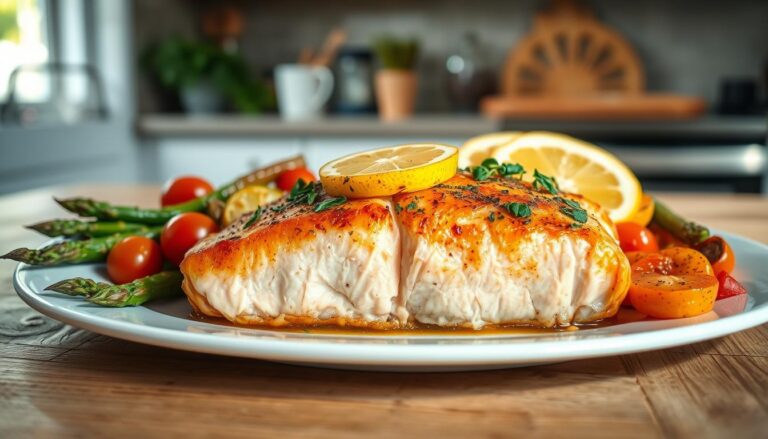
Lemons are a key ingredient. Use sliced lemons under the fish and fresh lemon juice on top. The lemon’s acidity balances the salmon’s richness. Garlic, whether fresh or powder, adds a savory flavor. Salt and pepper enhance the salmon’s natural taste.
For a touch of sweetness, try adding brown sugar or honey. Brown sugar is great for kids, and butter and honey make a thick sauce. A bit of regular paprika adds flavor and color without overpowering the fish.
- Whole salmon fillet (2-3 pounds, skin-on)
- Lemons (sliced and for juice)
- Fresh herbs (rosemary, thyme, parsley, dill)
- Garlic (fresh chopped or garlic powder)
- Olive oil or melted butter
- Salt and pepper
- Optional brown sugar or honey
- Paprika (regular, not smoked)
These simple, accessible ingredients work together to create something far greater than the sum of their parts. You’re building layers of flavor that make this weeknight dinner feel special without requiring extra effort or time.
Step-by-Step Instructions for the Best Baked Salmon Recipe
Now that you have your ingredients, it’s time to cook your salmon. Follow these steps to make a delicious meal every time. Each step builds on the last, creating rich flavors and perfectly cooked salmon.
Preparing Your Salmon and Pan
First, take salmon out of the fridge 10 minutes before cooking. This helps it cook evenly.
Then, preheat your oven to 375°F. For bigger fillets, use 350°F for a 3-pound one. While your oven heats up, get your pan ready.
Put foil on a rimmed baking sheet as the base. You can add parchment on top to avoid lemon-foil taste. This keeps your salmon from tasting metallic.
Creating the Flavorful Herb and Lemon Base
Put lemon slices and herb sprigs in the center as a bed for your fish. This adds flavor directly to your salmon.
Place salmon skin-side down on the lemons. Season with salt and pepper. Mix your spices or make a butter-honey-herb mixture in a bowl.
Brush salmon with olive oil or butter. Sprinkle with seasonings and add garlic on top. Add more lemon slices and herbs on top.
Juice the second lemon over everything. This adds a bright citrus flavor.
Sealing and Baking Your Salmon to Perfection
Fold foil up to create a sealed packet with air space. This steam cooks your salmon gently and keeps it moist.
Bake for 15-20 minutes for a 2-pound fillet, or 25 minutes for a 3-pound one. Don’t check too often.
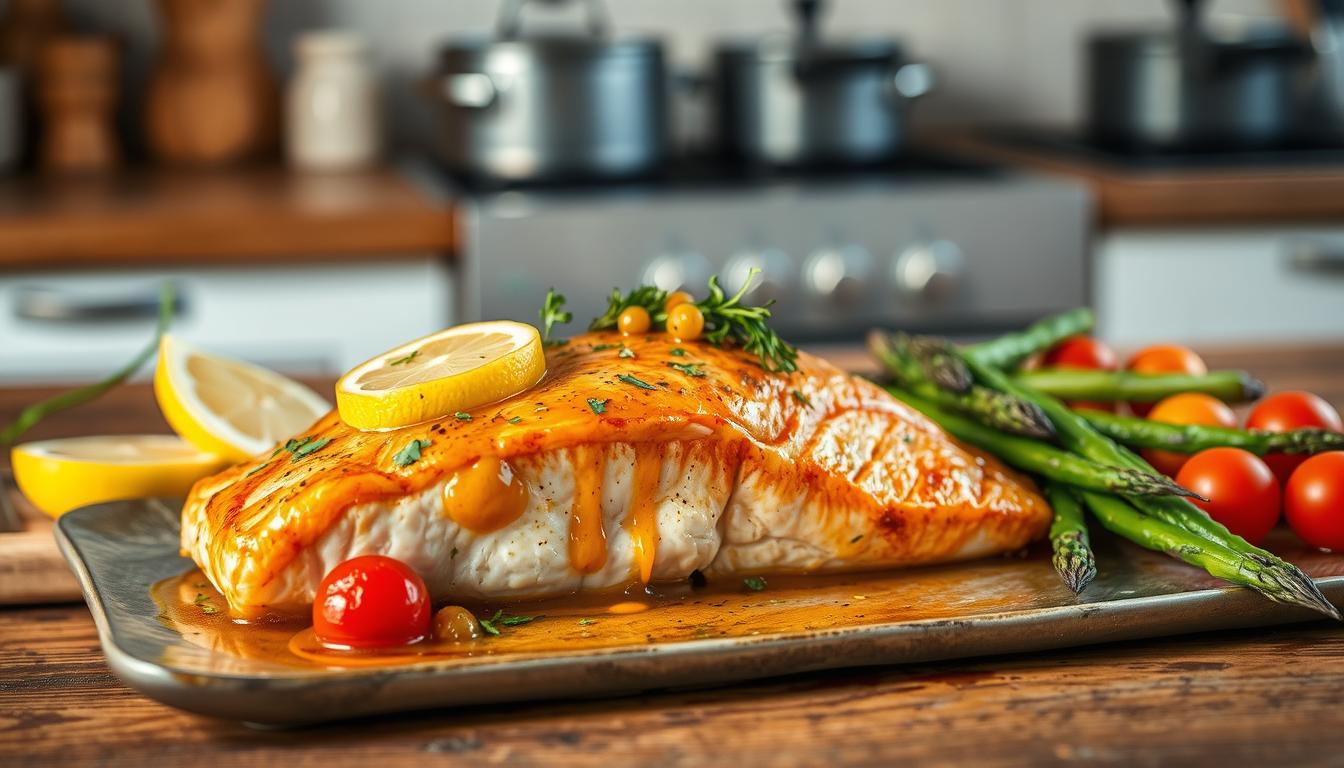
Open the foil carefully to release steam. Switch to broil. Broil for 3-6 minutes until golden for a nice finish.
“The key to perfect salmon is respecting the cooking time and not rushing the process.”
Your salmon is now ready to serve with your favorite sides.
How to Tell When Your Salmon Is Perfectly Cooked
Knowing when your salmon is done right can make a big difference. It can turn a dry, overcooked fillet into a moist, tender dinner. You can check your salmon without cutting into it and losing those delicious juices.
Using a Temperature Guide for Accuracy
An instant-read thermometer is your best kitchen tool for getting consistent results. Insert the thermometer in the thickest part of your salmon fillet to measure the internal temperature. Different temperatures give you different results:
- 115-125°F for medium-rare (still quite pink in the center)
- 125-140°F for medium to well-done (mostly opaque with minimal pink)
- 145°F is FDA recommended and the absolute cutoff for food safety
Here’s a pro tip: remove your salmon from the oven when it reaches 137-140°F. Then, cover it loosely with foil and let it rest for about 5 minutes. During this resting period, carryover cooking will bring the temperature up to the perfect 145°F without overdrying your fish.
The Fork Test Method
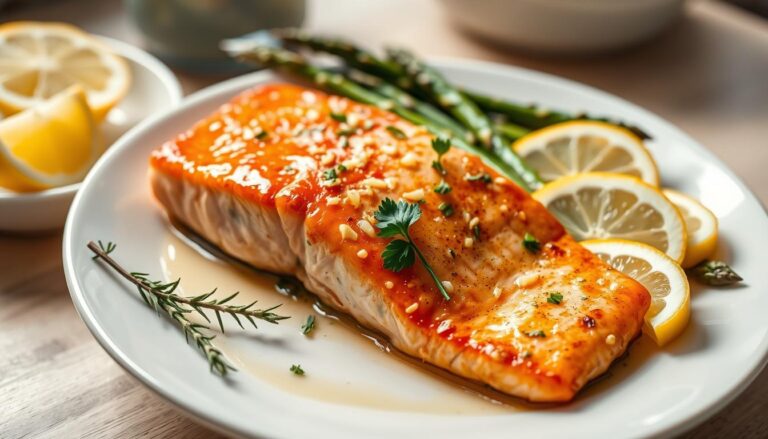
Without a thermometer, use the fork test to check doneness. Gently insert a fork into the thickest part and twist slightly. Properly cooked salmon will flake easily and appear opaque with perhaps just a hint of translucency in the very center. The flesh should look solid and beginning to separate into natural layers.
Visual Cues and Appearance
Look for opaque flesh that’s beginning to flake along the sides. Raw salmon appears translucent and shiny, while cooked salmon looks matte and solid. Different salmon types look different when cooked—King salmon stays slightly firmer than sockeye, for example.
| Doneness Level | Temperature Range | Appearance | Best For |
|---|---|---|---|
| Medium-Rare | 115-125°F | Pink center, opaque edges | Premium quality salmon |
| Medium | 125-135°F | Mostly opaque with slight pink | Everyday cooking |
| Well-Done | 135-145°F | Fully opaque throughout | Food safety preference |
| FDA Safe | 145°F | Completely opaque, flakes easily | Guaranteed safe consumption |
Like steak doneness, salmon doneness is somewhat a matter of personal preference. Practice makes perfect as you discover what works best for your taste. Salmon continues to cook as it rests, so timing matters. Each attempt builds your confidence and understanding of how perfectly cooked salmon looks and feels for your preference.
Choosing the Right Salmon at the Store
Choosing the right salmon is key to a great baked salmon recipe. You’ll find many types and sources at the grocery store. Knowing what you buy can improve flavor and quality. Plus, it supports sustainable fishing.
Wild-Caught vs. Farmed Salmon
Wild-caught salmon tastes better and is better for the planet than farmed. Wild salmon swim in the ocean and eat krill and plankton. This makes them taste richer and be more nutritious.
Farmed Atlantic salmon is fattier, less nutritious, and can taste soft. It lives in crowded pens and eats processed feed. Look for wild-caught Pacific salmon instead.
When shopping, check for MSC certification or use the Monterey Bay Aquarium Seafood Watch app. Wild salmon is pricier but freezes well. Buy extra when it’s on sale and freeze it for later.
Understanding the Five Types of Pacific Salmon
There are five types of Pacific salmon, but three are best for baking. Here’s what you need to know:
| Salmon Type | Characteristics | Best Use | Price Range |
|---|---|---|---|
| Chinook (King) | Thickest, most buttery, richest flavor | Special occasions, premium dishes | Most expensive |
| Sockeye | Lean, meaty, bold flavor, deep ruby color from krill and plankton diet, high omega-3s and astaxanthin | Everyday cooking, best quality from Bristol Bay Alaska | Moderate to high |
| Coho | Balanced flavor and texture, moderate fat content | Weeknight dinners, versatile cooking | Middle price range |
| Pink | Mild flavor, softer texture | Usually canned | Budget-friendly |
| Chum | Strong flavor, firm texture | Primarily used for roe | Variable |
Most fisheries recommend wild Bristol Bay sockeye from Alaska. This region has the largest sockeye run. Around 8,000 fishermen hand-harvest the fish sustainably. Their diet of krill and plankton gives them a deep ruby pink color and lots of omega-3s and astaxanthin.
For your baked salmon recipe, choose between Chinook for a rich treat, sockeye for excellent everyday quality, or coho for a balanced option that won’t break your budget.
Fresh vs. Frozen: What You Need to Know
Most salmon in stores is flash-frozen shortly after being caught. Frozen salmon can be just as good as fresh.
When buying frozen salmon, check the ingredient list carefully. It should list only “salmon” with no additives or preservatives. Avoid packages with long ingredient lists or unfamiliar chemicals.
- Flash-frozen fish locks in nutrients and flavor
- Frozen salmon thaws quickly at home
- Buy extra wild salmon when on sale and freeze for future meals
- Look for solid, frost-free packages
- Store frozen salmon up to three months at zero degrees
Fresh salmon should smell like the ocean, not fishy. The flesh should be firm and spring back when you touch it. Choose fillets with bright color and no brown spots.
Whether you pick fresh or frozen, buying wild-caught salmon from trusted sources ensures you get great taste and support responsible fishing practices.
Delicious Variations to Keep Your Salmon Exciting
Baking salmon doesn’t have to be the same every night. You can try new flavors to keep dinner exciting. Whether you want something light or something bold, there’s a way to make it.
Changing herbs and citrus can make a big difference. Try lemon and dill for a classic taste, then switch to rosemary for a different flavor. Fresh herbs like parsley, green onion, thyme, and oregano add a sharp taste. Dried herbs can take away the freshness of baked salmon.
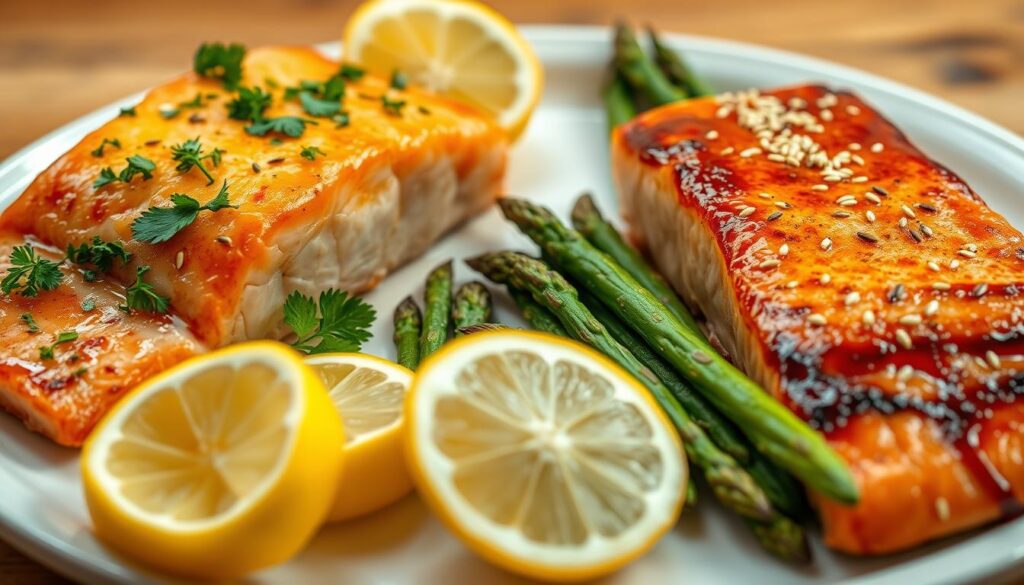
For richer flavors, use melted butter instead of olive oil. Lemon and butter make a delicious sauce. You can also use half and half for a creamier taste. Garlic butter salmon adds savory depth easily.
Want something bolder? Here are some ideas:
- Pesto salmon—cover your fillet with pesto and skip the rosemary for a green coat
- Spicy versions with buffalo heat or blackened seasoning for a kick
- Dry rub with salmon seasoning or your favorite spice blend
- Salmon marinade with soy sauce, honey or maple syrup, and Dijon mustard
- Teriyaki salmon for a sweet and savory Japanese dish
- Asian flavors with soy ginger
- Miso glazed salmon for a rich umami taste
- Parmesan crusted salmon for a crispy, cheesy top
With these ideas, you can make meals that match your mood and cravings.
Best Side Dishes to Serve with Baked Salmon
Your baked salmon needs the perfect side dish. The right choice can turn a simple dinner into a special occasion. Salmon pairs well with many dishes, from simple to fancy. Roasting salmon and veggies together is a great way to save time.
Remember, cooking salmon and veggies together might take longer. A good trick is to swap their positions in the oven halfway. This helps them cook evenly and stay tender.
Roasted Vegetables and Potatoes
Roasted veggies are a great match for your salmon. Here are some tasty options:
- Herb roasted potatoes soak up sauce from sheet tray, making them incredibly flavorful
- Chili oil smashed potatoes with heat add spice and depth to your plate
- Roasted broccolini develops a slightly charred, crispy texture
- Air fryer green beans cook to fork-tender perfection in just 10 minutes
- Bok choy seared and steamed brings an Asian-inspired touch to your meal
These veggies are great because they soak up flavors well. You can cook them in the same pan as your salmon for easy prep.
Fresh Greens and Light Salads
Balance your meal with fresh greens and light salads. These options keep your dinner feeling light:
- Simple mixed green salads with lemon vinaigrette
- Spinach salads with light dressing and fresh herbs
- Arugula with shaved Parmesan and olive oil
- Cucumber and tomato combinations with fresh basil
Light salads refresh your palate after the richness of baked salmon. They add crunch and brightness without feeling heavy.
Storing and Using Leftover Baked Salmon
Your baked salmon dinner is best enjoyed the day it’s made. Fresh salmon straight from the oven tastes incredible and has the perfect texture. Leftover salmon, on the other hand, requires smart storage and handling to stay delicious.
Cooked salmon keeps in refrigerator for 1-3 days when stored in an airtight container. Some sources suggest 1-2 days for peak quality, while others say you can stretch it to 3 days if stored properly. The key is keeping your salmon sealed away from air and other foods. Salmon can dry out when reheated, so handle your leftovers with care.
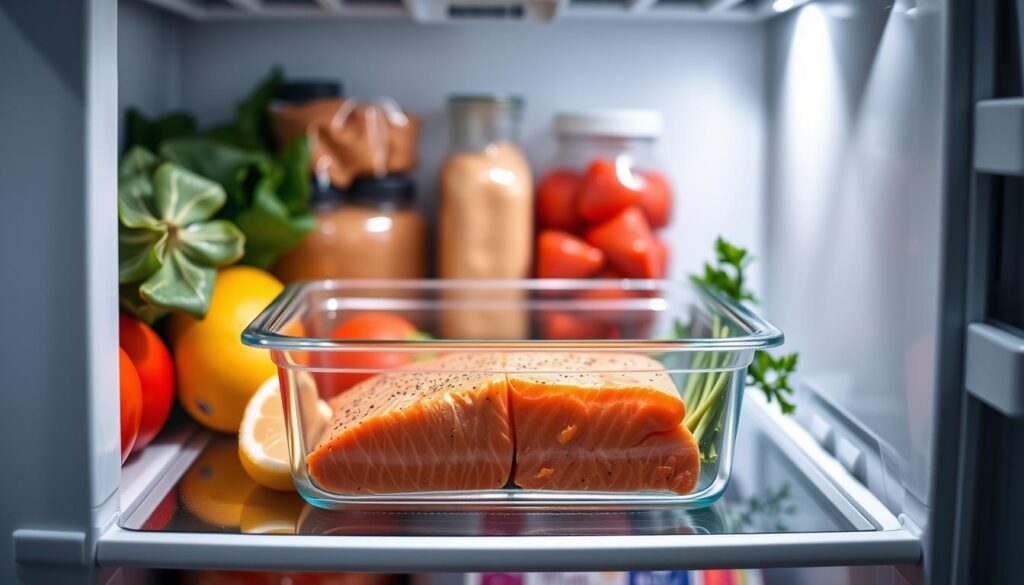
Freezing cooked salmon is an option, but it comes with trade-offs. Cooked salmon doesn’t freeze very well because the texture changes and it tastes more fishy after thawing. If you must freeze it, cooked salmon can freeze up to 2 months. Remove it from the skin first and store it in an airtight container. Thaw in fridge overnight before using in recipes calling for canned salmon.
The best approach? Enjoy your leftover salmon cold or at room temperature. This sidesteps the reheating problem altogether.
Smart Ways to Use Your Leftover Salmon
- Serve cold or room temperature on salads for an easy lunch
- Scramble with eggs for a protein-packed breakfast
- Mix into simple pasta with olive oil and garlic
- Use in salmon salad with mayo and fresh herbs
- Make salmon patties or croquettes for dinner
Reheating Your Salmon Properly
If you choose to reheat, let your salmon come to room temperature first. This step matters more than you might think. From there, you have two solid options:
- Microwave on medium-low power until just warmed through
- Reheat in a covered skillet over medium heat with a splash of water to steam for 2-4 minutes
Watch for fishy flavors that can become more pronounced after storage and reheating. Gentle, quick warming prevents this problem from getting worse.
| Storage Method | Duration | Best For |
|---|---|---|
| Refrigerator (airtight container) | 1-3 days | Eating cold or gentle reheating |
| Freezer (skin removed) | Up to 2 months | Recipes calling for canned salmon |
Your leftover salmon has real potential. Skip the stress of reheating and explore these creative uses instead. You’ll find that cold salmon often tastes just as good as the original meal—sometimes even better.
Conclusion
You’ve learned how to make baked salmon that tastes like it came from a restaurant. This recipe is great for both beginners and experienced cooks. It’s easy to follow, making it perfect for your first try. Yet, it’s impressive enough that even seasoned cooks love making it again.
This dish is perfect for any occasion. You can enjoy it as a simple weeknight meal or impress your guests. It’s not only tasty but also healthy, full of omega-3s and protein. Even those who are picky will love it. Plus, you can customize it with your favorite herbs and veggies.
Choosing wild-caught salmon supports sustainable fishing and helps protect salmon for the future. Imagine serving this dish to your great-grandkids. Your choices today make a big difference.
Be proud of yourself for mastering this recipe. Cooking beautiful salmon at home is a big accomplishment. Share your success, take photos, or just enjoy knowing you’ve added a healthy dish to your meals. This skill will benefit you for years to come. You’re all set to make it happen.